Science
Fusion's DeepSeek Moment?
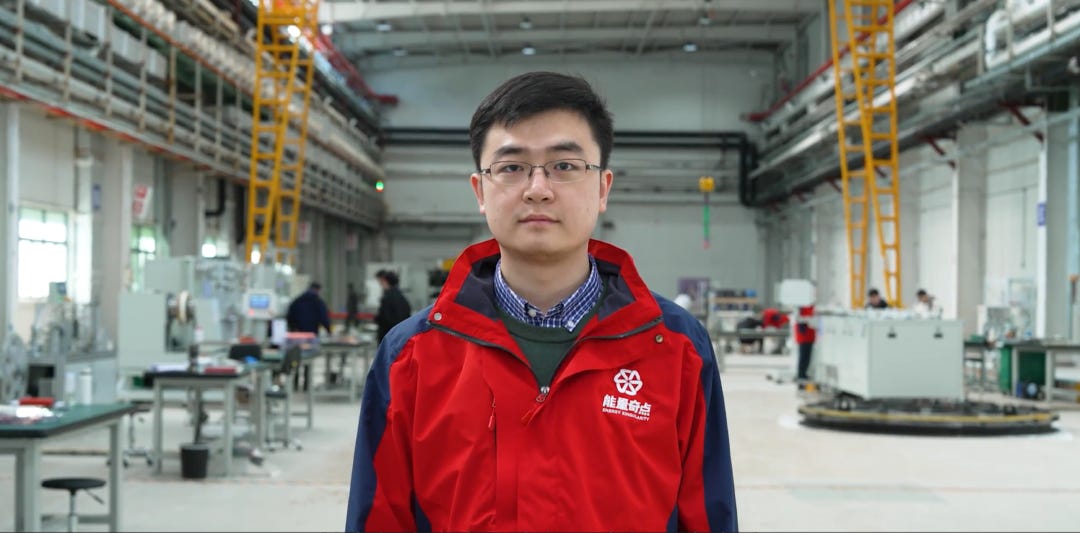 Image: Primary
 China has included nuclear fusion among its priorities for cutting-edge science and technology in the 15th Five-Year Plan. The plan calls for breakthroughs in tritium fuel preparation and recycling, materials irradiation testing, high-performance lasers, and superconducting magnet manufacturing. It also calls for plasma operation experiments on deuterium-tritium fusion and feasibility verification across multiple technical approaches.
Yang Zhao, CEO of Energy Singularity, described the company's work on high-temperature superconducting tokamaks in a recent interview. The Shanghai startup completed its HH-70 device in two years and achieved first plasma last year. It is the world's first functioning HTS tokamak.
Energy Singularity also produced a magnet this year that generates a field of 21.7 teslas. The company built the HH-70 for 16 million dollars. Commonwealth Fusion Systems previously held a record of 20 teslas and is developing its SPARC device with first plasma expected in 2026.
Energy Singularity plans to complete construction of its HH-170 device by the end of 2027. The interview noted that both companies' cost estimates are on the order of 50 times cheaper than the ITER project. It suggested the United States may be in for another DeepSeek moment in fusion technology.
Sources
Evidence entered
Admission Evidence and chronology passed Science
Publication receipt Entered the validated Newswire


Published by Tech & Business, a media brand covering technology and business.
This story was sourced from ChinaTalk and reviewed by the T&B editorial agent team.
Back to Newswire